Your car is one of the most complex machines you own, yet most drivers only pay attention to it when something has already gone wrong. A strange noise gets ignored for a week, a warning light gets dismissed as “probably nothing,” and a small chip in the windshield sits untreated through three seasons of temperature swings — until a repair that would have cost a few hundred dollars turns into one that costs thousands. It’s an incredibly common pattern, and it’s one that costs American drivers billions of dollars in avoidable repairs every year.
Part of the problem is that modern cars are remarkably good at masking their own distress. Improved engineering and noise insulation mean that problems which would have been obvious and loud in a vehicle from the 1990s can now develop quietly over months before you notice anything at all. By the time a symptom becomes impossible to ignore, the underlying issue has often been compounding for a while. What started as a worn seal becomes a fluid leak. What started as a small crack becomes a structural problem. What started as an early transmission slip becomes a complete failure.
The truth is that your vehicle communicates constantly. It tells you when it’s struggling, when it’s been damaged, and when something internal is starting to fail — through sounds, smells, dashboard alerts, and changes in how it handles. Learning to read those signals — and knowing which type of professional to call — is one of the most valuable habits you can develop as a car owner. The cost of a diagnostic visit is almost always dwarfed by the cost of ignoring a problem until it becomes urgent.
When Your Car’s Appearance Takes a Hit After a Collision

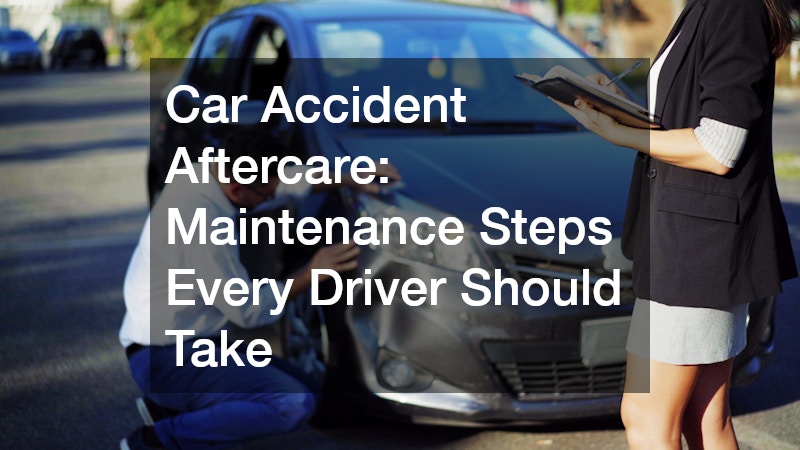
After a fender bender or parking lot scrape, many drivers assess the damage visually and decide it’s “not that bad.” But cosmetic damage and structural damage don’t always look different from the outside, and that’s a dangerous assumption to make. An auto body shop doesn’t just fix dents and repaint panels — they inspect your vehicle’s frame, crumple zones, and alignment to make sure your car is still safe to drive.
Even minor dents, if left untreated, can compromise the paint seal and allow moisture to get underneath. What starts as a small scratch can develop into surface rust within months, especially in climates with humidity or road salt. Once rust takes hold, it spreads and weakens the metal around it, turning a cosmetic problem into a structural one.
There’s also a growing category of appearance-related services worth knowing about: car wrap services. A professional wrap is a cost-effective alternative to a full repaint for color changes, and high-quality wraps also protect the underlying paint from UV damage and minor abrasions. If your vehicle has sun-faded panels or you want to update its look without a costly respray, wraps are worth serious consideration.
Signs you need a post-collision inspection, even for “minor” damage:
- The car pulls slightly to one side when driving straight
- Panel gaps around doors, the hood, or the trunk look uneven
- A door doesn’t open or close as smoothly as it used to
- You notice paint cracking, bubbling, or peeling near the impact zone
- The trunk or hood doesn’t latch as firmly as before
Strange Noises, Warning Lights, and Performance Issues You Shouldn’t Ignore

Modern vehicles are equipped with onboard diagnostic systems that monitor everything from engine temperature to oxygen sensor output. When something falls outside acceptable parameters, a warning light illuminates. A lot of drivers either ignore these lights or assume they’re false alarms — but even the ones that seem minor (like a gas cap warning) are worth addressing quickly, because they can mask more serious codes running underneath.
Beyond the dashboard, your car’s sounds are one of its most direct ways of signaling trouble. Grinding when you brake means your brake pads are likely worn down to the metal, and continuing to drive on them risks damaging the rotors — a much more expensive fix. A knocking sound from the engine often points to issues with the connecting rods or low oil pressure. A high-pitched squeal when turning can mean your power steering fluid is low or your belt is worn.
This is where a skilled mechanic earns their value. While OBD-II scanners available at auto parts stores can read fault codes, they tell you what triggered the alert, not why. A trained mechanic can assess the full picture — testing components, checking related systems, and catching compounding issues that a code reader alone would never surface.
Common warning signs and what they might mean:
- Check engine light (steady): Often an emissions or sensor issue — get it scanned soon
- Check engine light (flashing): Active misfire — pull over safely and get a tow
- Oil pressure light: Stop driving immediately; running the engine can cause severe damage
- Battery light: Could be the battery itself, the alternator, or a charging system fault
- Temperature warning: Engine is overheating — pull over, do not keep driving
Windshield Cracks and Glass Damage That Demand Immediate Attention
A small chip in your windshield can feel trivial — until it’s not. Glass damage spreads faster than most people realize, especially when temperature swings cause the material to expand and contract. A chip the size of a quarter in the morning can become a crack running across your field of vision by afternoon if the temperature drops sharply. And once a crack crosses into the driver’s line of sight or reaches the edge of the windshield, most insurance companies and state laws require full replacement rather than repair.
Windshield repair services can address chips and short cracks quickly and affordably — often in under an hour — by injecting a resin that restores structural integrity and optical clarity. The key is acting fast. Once a chip has been contaminated by dirt or moisture, or once a crack has spread beyond a certain length, repair is no longer possible and replacement becomes the only option.
For drivers who are already on the road or away from home when damage occurs, many providers now offer mobile roadside services that come to wherever your vehicle is parked. Whether it’s your workplace or your driveway, a mobile glass technician can complete most repairs on-site, which eliminates the inconvenience of scheduling a shop visit entirely.
When to repair vs. replace your windshield:
- Repair is typically possible: chips smaller than a quarter, cracks shorter than 3 inches, damage not in the driver’s direct line of sight
- Replacement is typically required: cracks longer than 6 inches, damage at the edge of the glass, chips directly in front of the driver, multiple damage points
Transmission Problems — The Repair Most Drivers Put Off Too Long
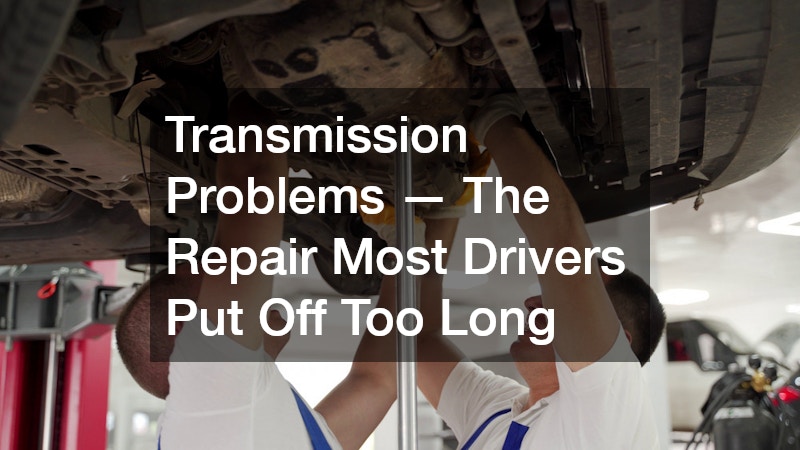
The transmission is one of the most expensive components in your vehicle, and it’s also one of the most neglected. Because transmission problems often develop gradually, drivers tend to rationalize early warning signs until the damage is severe. A slight hesitation when shifting gears becomes a full gear slip. A faint burning smell becomes a transmission that won’t engage at all.
Transmission repairs fall into a wide range depending on severity — from a fluid flush and filter replacement on the low end to a full rebuild or replacement on the high end. The difference between a $300 fix and a $4,000 fix often comes down to how quickly you responded to early warning signs. Finding a qualified auto repair shop with specific experience in drivetrain and transmission work is critical because this is highly specialized territory where generalist experience isn’t enough.
Warning signs that your transmission needs professional attention:
- Gears slipping — the engine revs but acceleration doesn’t follow
- Delayed engagement — a pause or jerk when shifting from park to drive
- Rough or hard shifting between gears
- Transmission fluid that is dark brown, smells burnt, or has visible debris
- A whining, humming, or clunking noise during gear changes
- A visible fluid leak under the center or front of the vehicle
The single best preventive measure is adhering to your transmission fluid change interval. For most vehicles, this falls between 30,000 and 60,000 miles, but consult your owner’s manual. Clean fluid keeps internal components lubricated and prevents the heat buildup that accelerates wear.
Electrical Failures and Audio System Issues You Can’t Afford to Overlook
Today’s vehicles rely on complex electrical architecture in ways that cars from even 15 years ago didn’t. Your infotainment system, lane-assist sensors, backup camera, keyless entry, climate control, and dozens of other features all draw from the same electrical ecosystem. When something goes wrong in that system, the symptoms can range from obvious (the car won’t start) to subtle (intermittent warning lights that come and go).
Common culprits for electrical issues include a failing alternator, a degraded battery, corroded connectors, or damaged wiring. Many of these are straightforward auto repairs when caught early but can cascade into serious problems when ignored. A weak alternator, for example, may initially just cause dim headlights — but if left unaddressed, it will eventually drain your battery and leave you stranded.
Aftermarket installations are another frequent source of electrical problems. Poorly installed systems — especially those handled by inexperienced car audio installers — can introduce ground faults, overload circuits, and even create fire hazards. If your car developed electrical quirks after an aftermarket audio or electronics install, that installation should be your first point of investigation. Reputable car audio installers will use properly rated wiring, fused connections, and follow factory wiring diagrams to avoid interference with the vehicle’s existing systems.
Signs your vehicle’s electrical system needs professional evaluation:
- Lights flickering or dimming while driving
- Battery dying repeatedly even after replacement
- Fuses blowing more than once for the same circuit
- Accessories (windows, locks, radio) that work inconsistently
- A burning smell near the dashboard or fuse box
What to Do When Your Car Breaks Down on the Road

Even the best-maintained vehicles can leave you stranded. Breakdowns happen — a nail in the tire, a battery that dies without warning, an overheating engine on a hot summer highway. Knowing how to respond calmly and safely is just as important as knowing who to call.
The first priority is getting to safety. Pull as far off the road as possible, activate your hazard lights immediately, and if you’re on a highway, stay inside your vehicle with your seatbelt on if you can’t safely reach the shoulder. Exiting your vehicle on a high-speed road is statistically more dangerous than staying inside.
From there, assess whether the situation is something you can manage — changing a flat tire in a safe location, for example — or whether you need professional help. Tow truck services are the right call when your vehicle cannot be safely driven, when you’re unsure what’s wrong, or when the breakdown involves a potential mechanical failure that needs a shop diagnosis before you attempt to move the car. Driving on a seized engine, a failed transmission, or a damaged suspension can cause far more destruction than the original failure.
Roadside services through membership programs like AAA or add-ons through your auto insurance typically cover towing, battery jumps, flat tire changes, and fuel delivery. The annual cost of these memberships is often recovered in a single incident.
Before you ever need help, prepare your car and your phone:
- Store a basic emergency kit in your trunk: jumper cables, a reflective triangle, a flashlight, and a tire inflator
- Save the number for your roadside assistance provider and a local towing company in your contacts
- Know your vehicle’s make, model, and year by heart — you’ll be asked when you call for help
- Keep your insurance card and registration accessible in your glove box
Your car doesn’t break down silently — it gives you signals along the way. A faint grinding sound, a warning light that flickers on and off, a windshield chip you keep meaning to get fixed, a gear change that feels slightly off. These aren’t minor nuisances to be tolerated until something more dramatic happens. They’re invitations to act before the situation gets significantly worse and significantly more expensive.
The drivers who avoid the biggest repair bills aren’t necessarily the ones with the newest vehicles or the most mechanical knowledge. They’re the ones who take early warning signs seriously, who build relationships with trustworthy professionals in each specialty, and who treat routine maintenance as an investment rather than an inconvenience. A $150 diagnostic visit, a $60 windshield chip repair, a $100 transmission fluid flush — these small expenditures are what prevent the $3,000 emergencies.
It’s also worth shifting how you think about car care overall. Rather than waiting until a problem forces your hand, schedule a seasonal inspection at a shop you trust — even when everything seems fine. A trained eye will often catch things that haven’t yet triggered a warning light or made a sound you’d notice. Catching a cracking serpentine belt, a leaking brake line, or low transmission fluid during a routine inspection takes minutes. Dealing with the consequences of any one of those failures on a busy highway is a far harder day.